Why is my balance different from my spending money?
A bank balance tells you what is in an account now. It does not subtract tomorrow’s rent, next week’s direct debit or the money you want to leave untouched. A spending plan gives those amounts a job before you decide what is flexible.
How do you calculate safe to spend?
Start with the spendable balance included in your plan. Subtract protected payments due before the next income date, your safety buffer and goal contributions reserved for that period. Divide the remaining flexible money by the days in the planning window for a daily guide.
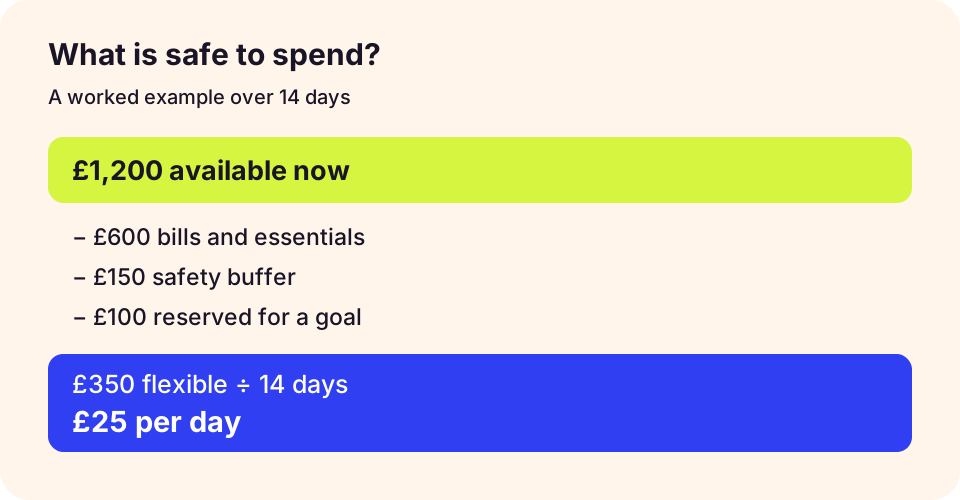
A £1,200 worked example
Suppose you have £1,200 and your next income is 14 days away. Bills of £600, a £150 buffer and a £100 goal contribution leave £350. Dividing £350 by 14 gives a £25 daily guide.
If you spend £40 today, the flexible pot falls to £310. Tomorrow’s guide should be recalculated using the updated balance and remaining days. A higher daily figure after a quiet day is permission to reconsider your plan, not a reason to spend the difference.
How does Headway show the result?
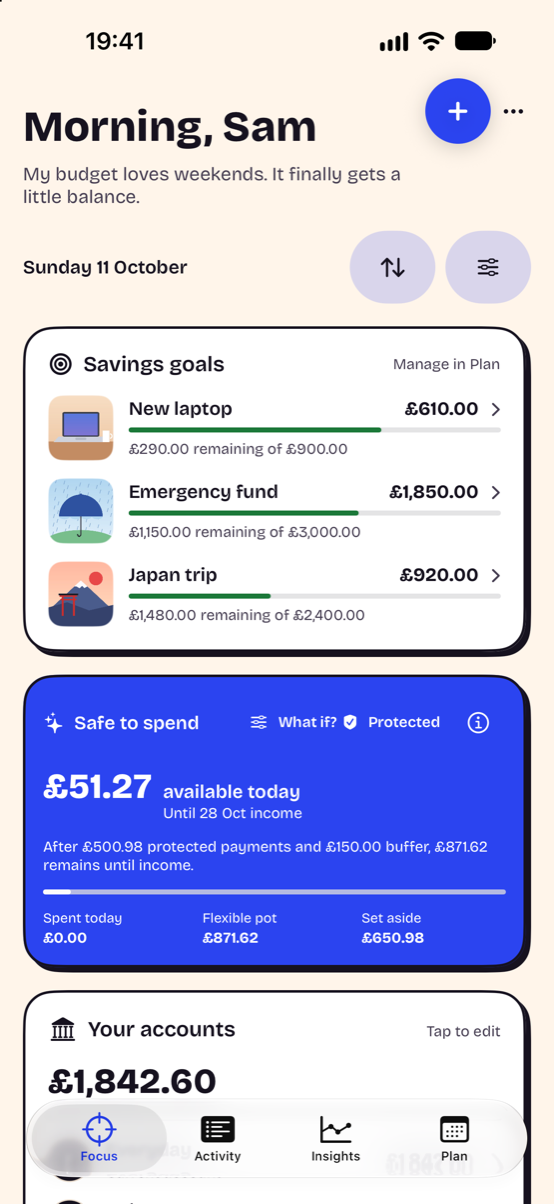
Focus shows a daily Safe to Spend figure together with protected payments, a buffer and the flexible pot. Activity holds the transactions behind that figure; Plan holds upcoming payments and goals. Keeping these roles distinct makes a changed number easier to understand.
What should you include in protected payments?
Include commitments due during the planning period, such as rent, utilities, minimum debt repayments and subscriptions you intend to keep. Allow for essentials such as food and travel in your plan too. Check whether you have already reserved an amount before subtracting it again.
What changes when income is irregular?
Use confirmed money and a cautious next-income date. Do not count an invoice as available cash simply because you have sent it. If income is uncertain, use a shorter review cycle and keep a buffer for delays. MoneyHelper’s irregular-income guide explains how to plan essential spending around variable earnings.
How do credit cards and pending payments affect the calculation?
Available credit is not income. Include the cash needed for card repayments without counting the same purchase twice. Check pending payments and transfers against your records: a manual plan cannot know about transactions you have not entered.
What happens if the result is zero?
A zero result means the figures entered leave no flexible money after your reservations. Review payment dates, account balances and duplicate entries first. If the shortfall is real, prioritise essentials and seek appropriate support rather than treating an app estimate as a borrowing recommendation.
Methodology and limits
This example explains the budgeting method with rounded demonstration figures. Headway’s current RunwayEngine subtracts protected payments, the safety buffer and goal commitments, floors the flexible pot at zero, then uses its planning horizon to calculate a daily amount. It is an estimate based on your entries, not a bank balance check or personal financial advice.
Use the free safe-to-spend calculator with your own figures. For a longer plan, read budgeting with irregular income, choosing an iPhone budget app and the US paycheck budgeting guide.
Further reading: CFPB’s Your Money, Your Goals toolkit includes tools for a bill calendar and cash-flow budget.